A town where septic runs on the visitor calendar
Camino is a small ridge town with an outsized autumn. From Labor Day through Christmas tree season, Apple Hill's farms, bake shops, wineries and cider houses pull visitors up Carson Road by the tens of thousands. Every one of those visitors uses a restroom somewhere, and nearly every restroom on the hill drains to a septic system. There is no municipal sewer waiting to rescue an overloaded tank in October. The operations that sail through harvest season are the ones that treat septic capacity as part of the business plan, right alongside parking and payroll.
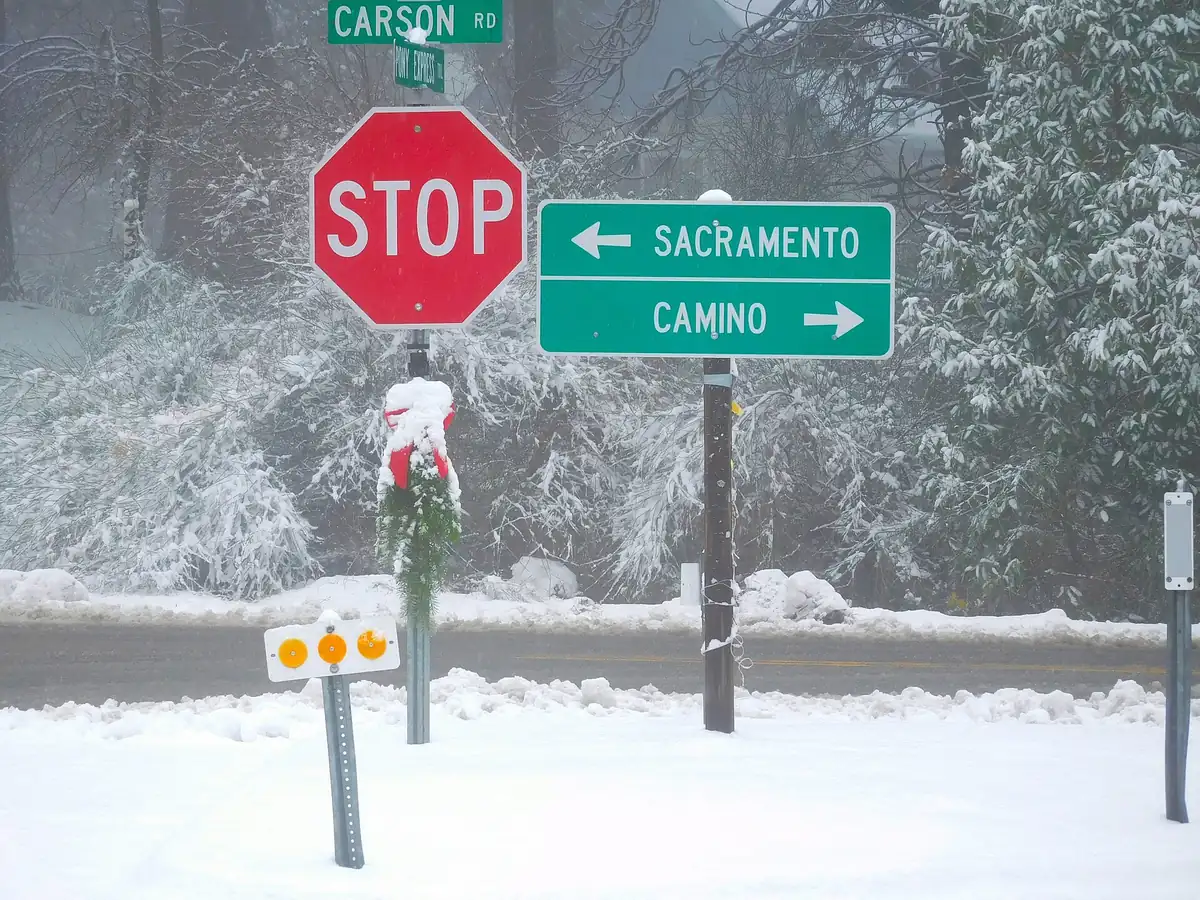
The residential side of Camino lives with the other half of the equation: real winter. At 3,000 feet the town catches snow that Placerville only sees a few times a year, the ground stays saturated through the melt, and the path to a tank lid can sit under a plow berm for weeks. Both halves of Camino life point to the same conclusion. Septic work up here is a scheduling problem before it is anything else.
The Camino septic year
Spring: let the ground drain
Snowmelt keeps Camino soils wet well into spring, and a leach field working in saturated ground is at its weakest. This is the season to watch for slow drains and surfacing water, and to book inspections once the ground firms up. It is a poor season for major digging. Excavating wet ground compacts and smears the very soil a leach field depends on, so experienced contractors hold the big jobs until things dry out.
Summer: the work window
Dry ground, long days, and empty parking lots make summer the season for everything substantial: leach field repairs, tank replacements, riser installations, and the routine pumping that ought to happen before the fall crush. Contractor calendars are most open in early summer and tighten steadily as September approaches, so the operators who book in June get the good dates.
Fall: harvest, crowds, and no margin
Once the season starts, an Apple Hill operation cannot take its restrooms offline on a Saturday. Whatever was not fixed by September gets managed, not repaired. Mid-season help exists, and emergency septic response reaches Camino year-round, but an emergency pump-out during peak season is triage. It costs more than the maintenance visit that would have prevented it, and it happens with a parking lot full of customers watching the truck.
Winter: access is the question
Septic systems do not stop working in the cold, but a pump truck needs somewhere to park and a clear path to the tank. If your driveway ices over, or the lids sit where the roof sheds its snow, winter service gets complicated fast. Homes that host holiday guests should head into December with a recently pumped tank and lids that someone can actually find under snow.
What a surge weekend does to a septic system
A septic tank works by holding wastewater still long enough for solids to settle out. A family home gives it all day to do that job. A bake shop restroom on an October Saturday pushes a steady stream through for ten hours, keeps the tank stirred up, and shoves water toward the leach field faster than anything can settle. Solids that should have stayed in the tank ride out into the field, and the field pays for that season years later. Kitchen grease does the same damage on a faster clock. The countermeasures are practical: honest capacity for the real crowd, grease traps serviced on their own schedule, and more frequent septic pumping during the months that matter. Our pumping cost guide covers what routine and commercial visits actually run in this county.
A pre-season checklist for Apple Hill operations
The contractors we refer see the same pattern every fall, so the checklist is short and earned:
- Pump the tank in late summer even if it was pumped last year. Start the season with full working capacity.
- Open the tank and check baffles and effluent filters before opening weekend, not after the first slow Saturday.
- Service kitchen grease traps separately. A grease-bound system misbehaves at the worst possible time.
- Map your lids and cleanouts, and keep event parking off the leach field. One season of cars over the lines can crush decades of function.
- Put a septic contractor's number in the manager binder before the first caramel apple sells.
Mountain homes at 3,000 feet
Off the commercial strip, Camino is quiet lanes of full-time homes and cabins under the pines. Systems here face the elevation itself: frost reaches deeper than it does down the hill, melting snow saturates leach fields for weeks, and conifer roots hunt the steady moisture inside leach lines with real patience. Part-time places deserve special mention. A system that sits idle five days a week and then hosts a full house is harder to read than a full-time home, and its problems announce themselves late. A periodic septic inspection on a calendar, rather than a hunch, is the cheap answer, and it pairs naturally with a scheduled pump-out so one visit covers both. Two winter habits help at this elevation: keep some daily flow moving through the system during hard cold snaps, because an idle line freezes long before a working one, and mark your lid locations before the first storm so nobody is probing a snowbank with a shovel in January.
Whether you run a tasting room on the hill or a household under the pines, one call reaches a licensed local contractor who knows exactly what October does to Camino, and plans around it.