The oldest septic ground in El Dorado County
Diamond Springs was a working town before California had finished being a gold rush. The lime works, the mills, and the stage stop at the Highway 49 junction built a town core that still stands, and a surprising share of the houses around it are a century old or better. Almost none of that core ever got sewer. What sits under those parcels today is every generation of onsite wastewater treatment the county has seen: redwood boxes long since collapsed and abandoned, hand-poured concrete tanks from the forties and fifties, steel tanks that rusted thin decades ago, and clay tile leach lines laid by men who never imagined a garbage disposal or a second washing machine.
That matters because a septic system does not announce its age. A 1950s tank will accept flushes right up until the lid sags or the outlet baffle drops off and lets solids run straight into the leach field. The contractors we refer open a lot of tanks in Diamond Springs, and the first visit to an older parcel is often the first time anyone has looked inside in twenty years. If you own an older home between the old town and Missouri Flat and you cannot say when the tank was last opened, that is job one.
Undersized tanks fill on their own schedule
Current county standards put a 1,500 gallon tank or larger under a typical three-bedroom home. Plenty of vintage Diamond Springs tanks hold 750 or 1,000 gallons, and a few hold less than that. The arithmetic is blunt: a tank at two-thirds the modern size reaches its working limit in roughly two-thirds the time. A household that could pump every five years in a newer home may need septic pumping every two to three years here to keep solids from migrating into the field. The interval is not a moral judgment, it is just the size of the box.
A smaller tank does not cost more to pump. Most of the price is the truck, the trip, and the disposal fee, and access in the older neighborhoods is usually easy, so Diamond Springs jobs tend to land at the friendly end of the county range. Our septic pumping cost guide lays out realistic local numbers. What actually raises the bill in this town is a buried lid nobody can find, which is common on parcels that have changed hands five times since the tank went in. Once risers are installed, every future visit is faster and cheaper.
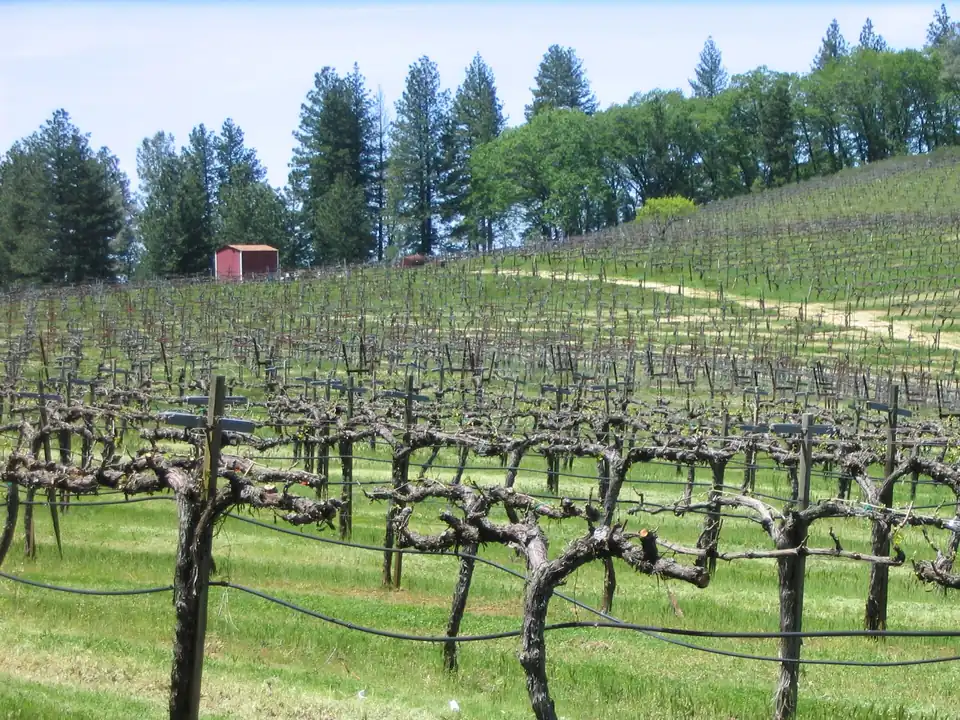
The Pleasant Valley Road corridor and the Highway 49 junction
Septic conditions in Diamond Springs change street by street. Near the old town core the ground is relatively flat and workable, but lots are small enough that the tank, the leach field, the property line, and sometimes a neighbor's well all crowd each other, which limits the options when a field needs replacing. Out along the Pleasant Valley Road corridor toward El Dorado, parcels open up to an acre or two of mid-century ranch homes with more room to work, but leach fields that are now sixty or seventy years old. The soil is a patchwork through all of it: decomposed granite that drains beautifully on one street, clay pockets that hold winter water two streets over.
The clay pockets are the ones that generate February phone calls. A leach field sitting in saturated clay after a storm series stops accepting water, and the first symptom is usually the lowest drain in the house running slow. If that describes your place every wet season, the field is telling you something, and it is worth a proper look before it quits outright.
Warning signs worth a phone call
Old systems rarely fail without notice. In Diamond Springs the pattern usually looks like one or more of these:
- Drains that slow down together rather than one fixture at a time. One slow sink is plumbing. A slow house is the tank or the field.
- A stripe of bright green grass over the leach lines in July when everything around it has gone brown.
- Sewage odor near the tank lids after heavy laundry days.
- Gurgling from tubs or toilets when the washing machine empties.
- Soft, wet ground over the field in a dry month.
Any one of these justifies a look. Two or more together justify it this week, because the gap between catching a failed baffle early and replacing a leach field is measured in tens of thousands of dollars.
Buying or selling an older Diamond Springs home
When a house here changes hands, the septic system is often the oldest working thing on the parcel, older than the roof, the wiring, and every appliance in the kitchen. A real septic inspection before sale means opening the tank, checking both baffles, measuring the sludge layer, and running water to prove the leach field still accepts flow. A flashlight glance down a riser is not an inspection, and in a town with this much vintage infrastructure the difference matters more than almost anywhere else in the county. Sellers who inspect and pump before listing take the biggest surprise off the table. Buyers who waive the septic inspection on a 1940s house are buying a mystery with a large deductible.
When repair beats another patch
Vintage systems can be kept alive a long time, but there is a point where the honest advice is to stop patching. A steel tank with rust holes, a redwood tank of any description, or clay leach lines that roots have colonized end to end are candidates for replacement, not another service call. Septic repair in Diamond Springs runs from a same-week baffle or lid fix to a fully engineered replacement on a tight old-town lot, with the county permit process attached to every serious job. And when an old system quits without warning on a holiday weekend, emergency septic service is the call to make before anyone flushes again.
One phone call connects you with a licensed local contractor who has worked these old systems before and knows the difference between a tank that needs pumping and a tank that needs a funeral.